Guided service model

Ysi service keeps measurement evidence practical

Instrument service is useful only when it helps operators repeat a reading, defend a tolerance, and keep a record that another reviewer can follow. Ysi service planning begins with the measurement task: what is being tested, what uncertainty is acceptable, what standard the certificate should cite, and how quickly the instrument needs to return to use.

That approach gives purchasing, quality, maintenance, and laboratory teams a shared language. Instead of treating calibration as an afterthought, the service path becomes part of the product decision. Advisors help define intervals, accessory checks, sensor care, and fallback plans before the site is under production pressure.
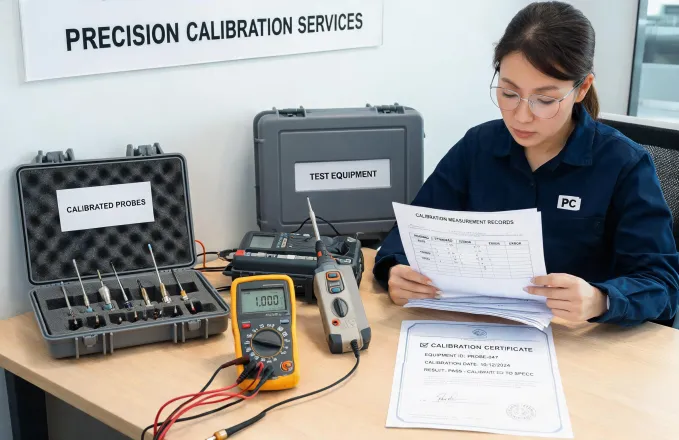
Calibration desk with sensor certificates and handheld instruments
01

Calibration scope review

Ysi advisors compare the instrument family against the site tolerance, reporting format, and audit exposure. The result is a service plan that names the certificate type, expected uncertainty statement, environmental assumptions, and accessories that should be included when the unit is sent in.

02

Repair and uptime coordination

Maintenance work is planned around production timing. Teams can discuss spare probes, loaner options, inspection notes, and turnaround expectations so measurement downtime does not force undocumented substitutions or improvised field checks.

03

Operator support

Training focuses on repeatable actions: probe conditioning, zero checks, data logging, sample handling, and when to stop using a reading. The goal is not a generic class; it is a practical handoff that fits the actual plant, laboratory, or field route.

04

Documentation continuity

Records are organized so the next reviewer can connect serial number, calibration event, measurement range, and service recommendation. That continuity helps teams avoid unclear files when instruments move between departments or sites.

Questions we settle early

Reduce ambiguity before the instrument is shipped.

The answer depends on the tolerance you must defend, the operating range, and whether the reading is used for acceptance, release, safety, or internal trending.

Service notes can include cleaning state, storage solution, cable condition, firmware version, and accessories that must travel with the instrument for a meaningful check.

Yes. Advisors can review measurement routines, data capture expectations, and operator checks so field results remain consistent across shifts and locations.

Before service planning

Teams often order the instrument first, then discover that the certificate, accessory, or data format does not match the procedure they need to satisfy. That late discovery can trigger extra freight, duplicate downtime, or a measurement record that leaves questions open.

After Ysi guidance

The instrument, sensor package, calibration interval, and evidence trail are discussed together. Purchasing sees the support requirement, quality sees the documentation path, and operators understand the checks that keep the reading usable.

Service conversation

Send the measurement task before you send the instrument.

Include the product family, range, sample conditions, reporting expectation, and downtime limits. Ysi will help organize a practical service path around those constraints.

Share your measurement requirement

Tell us the instrument type, operating range, approval requirement, and calibration evidence your team needs.

Please enter your name.
Please enter a valid email.
Please describe the measurement task.
Please confirm the privacy policy.